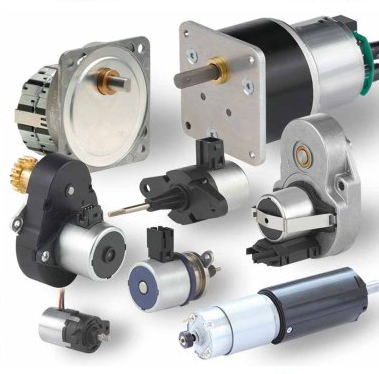
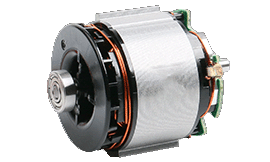
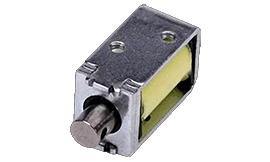
We supply a wide range of different types of motors including synchronous and asynchronous AC motors, brushed and brushless DC motors, and EC motors
UK Next Day Delivery
Expert Advice
No Min Order Charges
Technical Support
Flexible Payment Terms
Over 40 Years Experience
E. Preston Electrical
Motors
What are the different types of Motors?
AC Motors (Alternating Current)
Synchronous Motors:
Excited Synchronous Motor: Requires a separate DC supply for the rotor.
Reluctance Motor: Uses magnetic reluctance to generate torque.
Hysteresis Motor: Utilizes hysteresis in the rotor material for smooth operation.
Asynchronous (Induction) Motors:
Squirrel Cage Induction Motor: Commonly used due to its simplicity and durability
Slip Ring (Wound Rotor) Induction Motor: Allows for control of the rotor resistance
DC Motors (Direct Current)
Brushed DC Motors:
Series Wound DC Motor: High starting torque, used in traction applications.
Shunt Wound DC Motor: Constant speed, used in applications requiring stable speed.
Compound Wound DC Motor: Combines series and shunt characteristics.
Brushless DC Motors:
Permanent Magnet DC Motor (PMDC): Uses permanent magnets for the rotor.
Coreless or Ironless DC Motors: Lightweight and efficient
EC Motors (Electronically Commutated)
Energy Efficiency: EC motors consume less power compared to traditional AC motors, making them ideal for HVAC systems and industrial applications.
Brushless Design: Unlike conventional DC motors, EC motors use electronic commutation instead of carbon brushes, reducing wear and maintenance.
Integrated Electronics: They have built-in controllers that optimize performance and allow for variable speed control.
Compact & Versatile: EC motors are commonly used in fans, pumps, refrigeration systems, and ventilation units
What Do We Supply?
We supply a wide range of motors for a variety of applications. These include:
AC Motors
DC Bushless Motors
DC Brush Motors
EC Brushless Motors
High-power Density Motors
Stepper Motors
Servo Motors
Why Choose E. Preston?
Since our inception in 1980, our business focus has been on providing two things: a reputation for outstanding customer service, and an unbeatable range and stock of electrical and electronic components.
We feel we have achieved that at E Preston, and that probably explains our company growth over the years. We do not want to become complacent though, and we always work hard to exceed customers’ expectations when they deal with us, if we can.
Our service is unashamedly a little old fashioned, ensuring we follow up on promises to customers, and phoning back when we said we were going to. We also do our best to ensure the customer receives their order next day. You can also talk to us about flexible payment terms, if needed.
Please contact us if you need technical assistance about them or any of our products – our team of expert operatives will be happy to help.
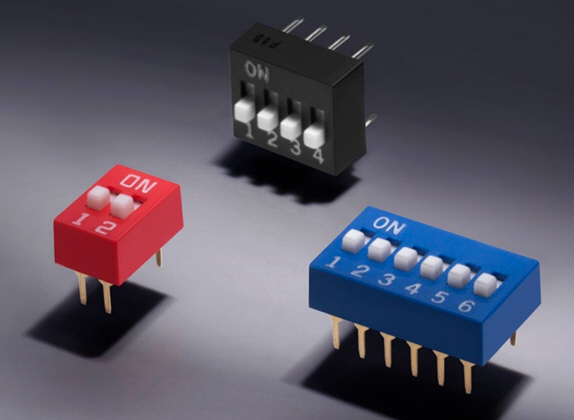
DSTH DIP Switch: Robust Standard Profile and 2.54mm Pitch THT (through-hole technology) Switch
2.54mm standard pitch
Robust THT design
Extended actuator for easy switching
Available in 3 colours: black, red, blue
The DSTH DIP Switch is a robust, standard-profile and 2.54 mm pitch THT (through-hole technology) switch. It enables electronic devices to be configured directly at hardware level. Addresses, communication parameters, logic states and operating modes can be set easily and clearly, without modifying software or firmware.
Electrically, the DSTH uses SPST contacts and offers 2~10, 12 multiply positions. Ratings are 25 mA at 24 V for frequently changing switching states and 100 mA at 50 V for constant switching states. Initial contact resistance is ≤ 50 mΩ and ≤ 100 mΩ after the specified tests. Further specifications include a dielectric strength of 500 V AC for one minute, 2,000 mechanical switching cycles and an operating force of ≤ 8 N. The operating temperature range extends from -40 °C to +85 °C.
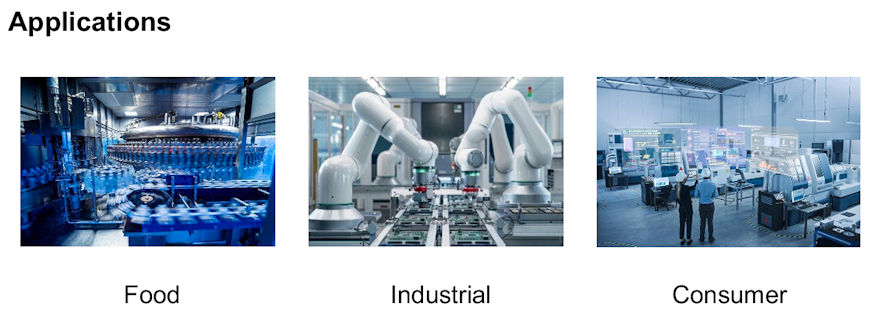
Typical applications include PLC controls, industrial servers, medical devices, robotics, air-conditioning systems and household appliances. In these applications, the DSTH can be used for RS485 and Modbus addressing, BIOS/CMOS settings, as well as the configuration of hardware parameters, functions and operating modes. Combining proven performance, competitive cost and fast availability, DSTH is an ideal solution for OEMs seeking a reliable alternative to premium-priced standard DIP switch brands.
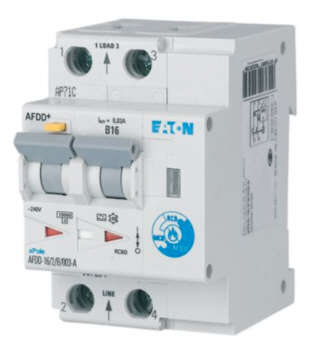
Eaton’s AFDD provides comprehensive protection against electrical fires triggered by arc faults. This all-in-one device combines the functions of a residual-current circuit breaker, miniature circuit breaker, and arc fault detection, protecting against electric shock, overcurrent, short circuits, and arc faults. Through continuous electronic cable monitoring, the device detects arc faults and trips automatically to reduce the risk of residential electrical fires. It provides electricians with a more efficient, standards-compliant solution for enhanced safety.
Tripping indicators show status and trip cause, saving fault‑finding time
AFDD busbar as accessory supports easy and flexible installation
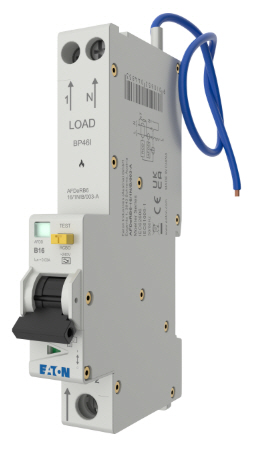
Single Module AFDD Eaton’s single-module AFDD range delivers all-in-one protection in a compact design. Engineered for residential and commercial applications, it enables space-saving distribution boards and seamless upgrades of existing installations, while supporting compliance with BS 7671 AFDD requirements.
Features:
Arc fault, overload, short circuit & residual current protection
Only 18 mm width
6 & 10kA
6 - 40A
B & C Characteristic
Type A
Idn 30mA
Types
Type -A: Protects against AC and pulsating DC residual currents.
Type -Li/A: As Type -A, but in addition it is short-time delayed. Highly reliable against unwanted tripping.
Type -G/A: 10 ms time delay in order to avoid unwanted nuisance tripping (e.g. during thunderstorms).
Type -F: Higher immunity against smooth DC currents and enhanced surge current proof capabilities.